Bedre internet på djk
kompost-fartøj / et eller andet om habitater
untitled(enter earth, 5.000°F)
PRAKSIS I PRAKSIS
hej lunokhod, posen er en slags (0,0), human bygger habitat, are we there yet
udleder frekvenser, lugten af regn, græder en summende tone, broken keyboard
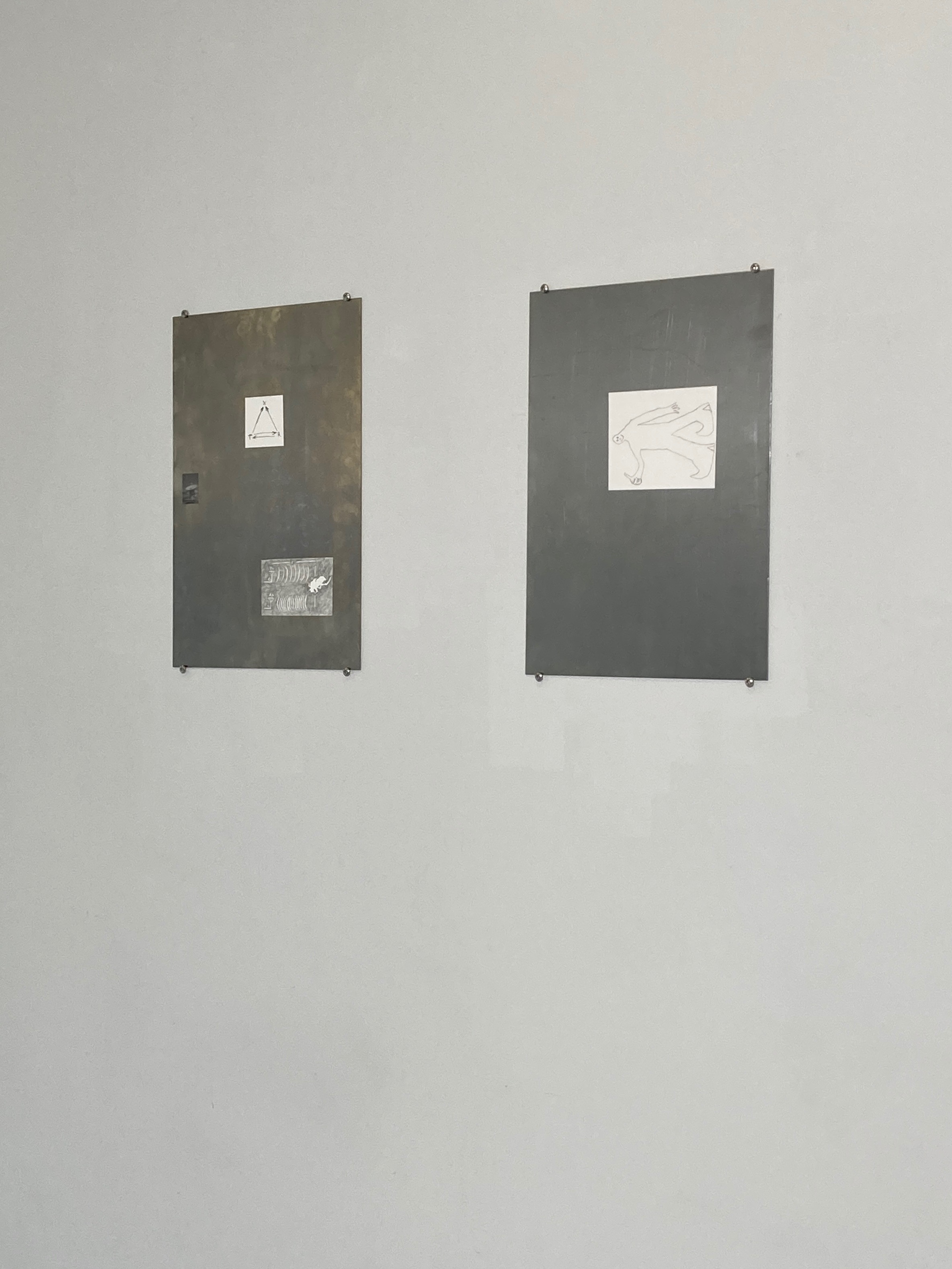
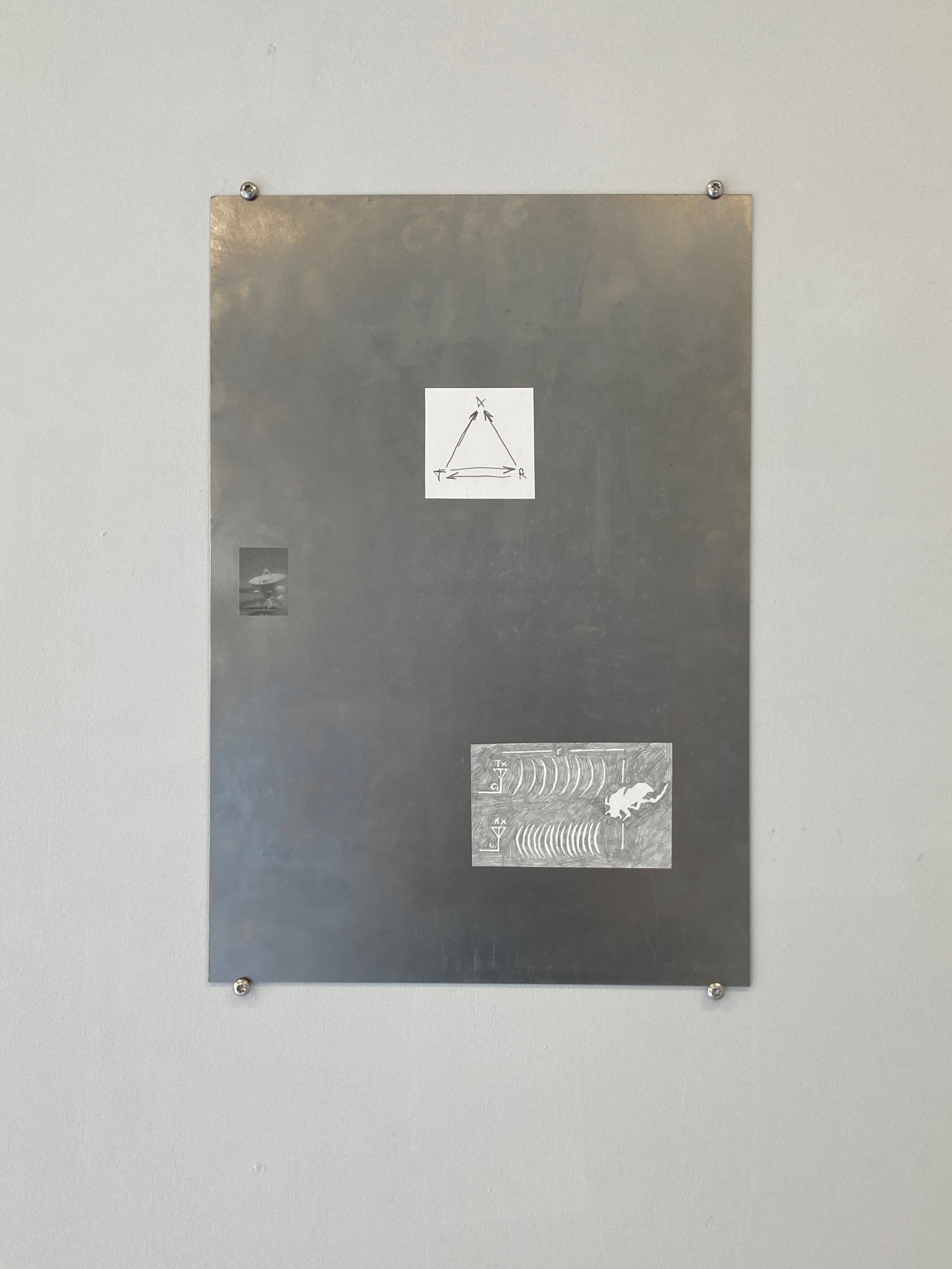
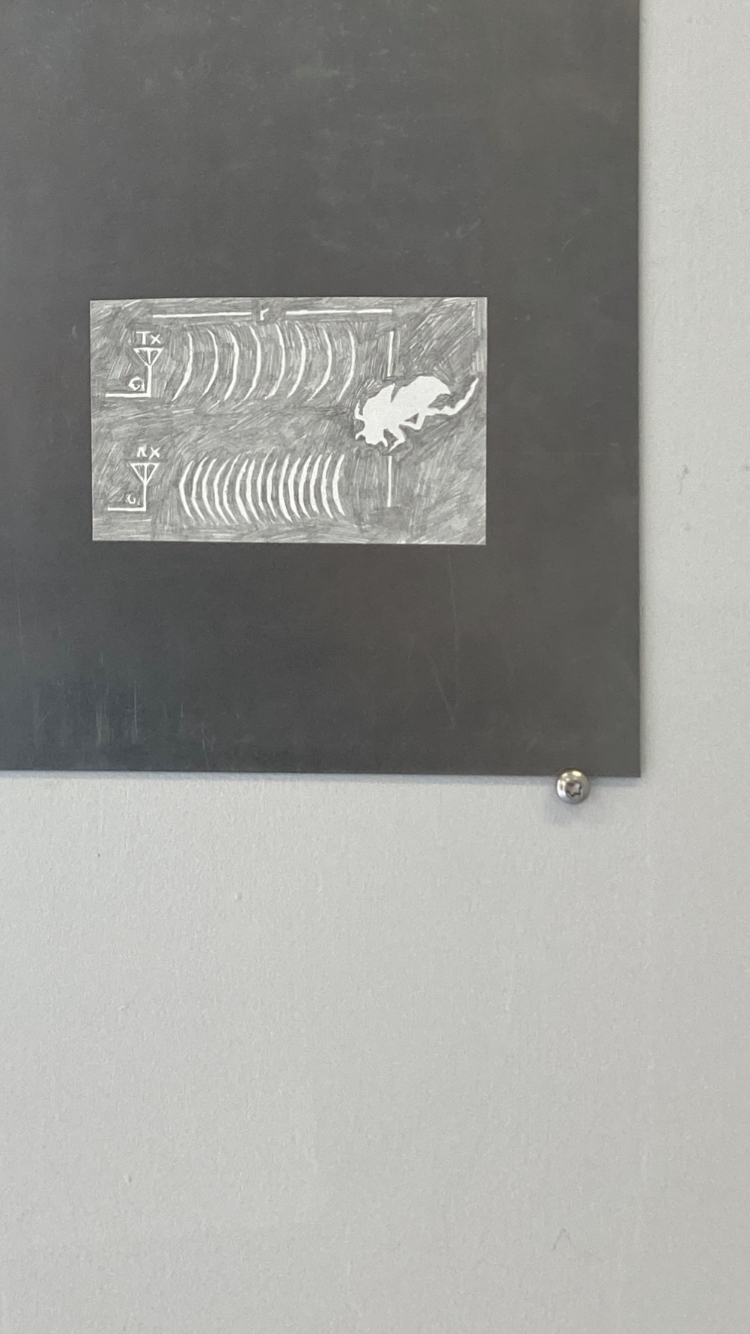
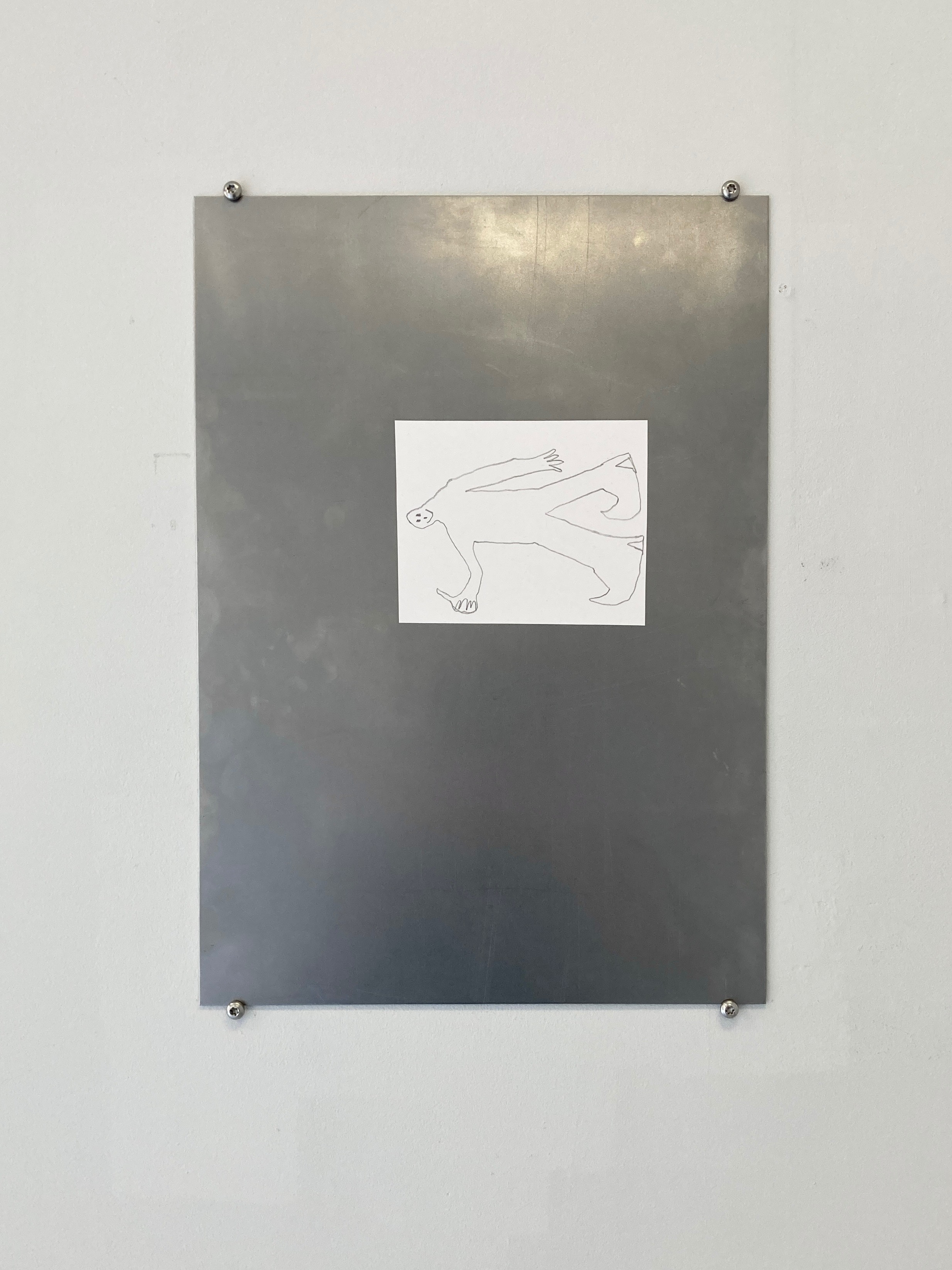
43,2x29,7cm / 42,2x29,8cm, graphite and K-toner on paper > on steel, 2024
-
Frseeeeeeeefronnnng, duo/Hanna Pherson at Isotop Project Room in Bergen, Norway
Through a webcam on the National Radio Astronomy Observatory's (NRAO) website, you can watch a section of the antennas at the Very Large Array (VLA)
work together in a wye-form: three long arms of nine telescopes each observe, communicate, and gather data through frequency-band receivers in search
of astro-objects, radio sources, extraterrestrials (or attempts thereof), and so on.
Elsewhere, an insect wanders around on top of a Taraxacum flower. You know this by monitoring data from a radio antenna attached to the insect's
thorax, you know its immediate terrain, vegetation, temperature, humidity, and whether it is ok.
If insects are conscious, can feel, and therefore suffer, should we not question and protect them in scientific research?
Concurrently, a fruit bat hangs from long vegetation, holding a soft fruit with its foot, while it meets your eyes or gazes toward the horizon. They
form strong, long-term kinships and can recognize their close kin by their vocal sounds. Though you may be aware of and know a lot about bats, as from
an excerpt of an Attenborough documentary, there are nonetheless subjective perspectives known only to the bat itself. We may therefore actually not
know what it would be like to be a bat, as Thomas Nagel argues in the paper 'What Is It Like to Be a Bat?'
In 'Frseeeeeeeefronnnng', artists Hanna Pherson and Helle Kongstad Holm Petersen work connected through a curious perspective to explore
different forms of being and communication: waves, frequencies, antennal-language. They delve into questions of zoo-gaze, anthropocentric ethics,
reductionist science, and surveillance.
-
Exhibition text by Helle Kongstad Holm Petersen