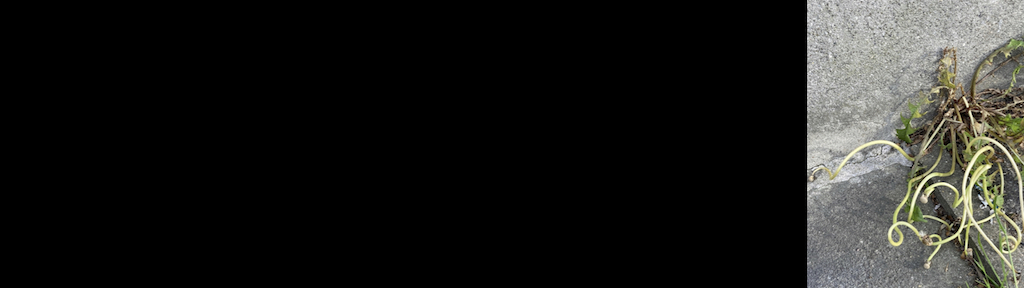

Thorn puller
-
Greens fuse, low vegetation, working ourselves through dry grama grasses and greasewoods. When wet they would look as green glass towards the browns or
iron oxide yellows of the soil. From an unfolding of web-searches, about natural occurred glass and anthropogenic glass, I once went through a text about,
how surface soil, as an effect of intense temperatures from a nuclear test, was turned to glass in an area south of Socorro. At ground zero, waves of
liquid soil fused together as a green, glassy substance. Flat as seaweed, or algae. A lot of it was cleared off and obscured underground somewhere else,
as to be forgotten, but the ecosystem knows; the incinerated forms of the photosynthetic ones, altered chemical forms, polluted waters, soils, non-human
others. And small glassy seeds are slowly brought to surface by insects and rain around the area. Gazed upon from a perspective of weather, the seeds
would read;
‘why(?)’
And get no answer.
From our zone of glassy vegetation, are one out of twenty-eight sites of the Long-Term Ecological Research (LTER) Network. A vertical rod, from which
three steel legs go outwards towards the ground, feet among earthworms or tethered in concrete. Upward along the vertical rod an array of instruments, e.g. anemometer, temperature and relative humidity sensors. On ground level, rain gauges. They operate from selected zones, in selected ecosystems, to
gather data on ecological responses in the geosphere, hydrosphere, and atmosphere; about soils, about vegetation, about water cycles, about gas fluxes, to
survey growing questions on how ecosystems function and why they alter, long-term. Ecological interrelatedness. They fluctuate in use of instruments and
act as situated antenna(e)’s, which percept in zeros and ones, or rather, we select an areal range of perception, and they answer in a tongue of zeros and
ones. Hourly, ongoing, I/O. Another gaze, on other ways of being. From teachings of slugs? From otherness, one learns. Though I wouldn’t know how a slug
processes its subjective perception of its surroundings, how a leaf filters through its inner self. I only know of my own subjective perception. As, among
slugs themselves, in slug-slug relations. Through language, communication occurs, and we relate to one another, not solely orally. Waves, frequency. Slugs
use their lower tentacles to analyze, chemical-communication, slime-text, text-slime.
You work on the instruments, evaluate the amount of rainwater in the gauges.
In thought, I quietly perceive how seaweeds grow once again, brown algae, or kelp. They grow from stalks, gas-bladders keep them vertical towards the sea
surface. Their fronds function as long solar arrays, oscillating. It’s from oscillating seaweed we learned to generate energy for our units. Interspecies
ongoingness. I heard of others, who worked on an organized web of antennas over large areas, set up to surveil selected species of non-human others in an
attempt to gather segments of data on their ways of being, on adapted ecologies. In a graph of y and x, an insect quivers, as told by an accelerometer. A
Brood X cicada. Once the surface soil reaches temperatures of 17.9°C, it would work itself upward through the ground. For seventeen years it feed on xylem
fluids, a sap from roots of broadleaf tress. Now out in the open, away from the supportive grasp of the rhizosphere, it grows out of its brown soil-form.
Its teneral, soft body darkens and toughens, orange-veined wings form, and above them, its beady red eyes. Seven species, fifteen broods.
For three or four weeks, one would hear the loud ‘zhr-eeeee’ octaves, soon outgrown from a louder quietness. A forecast for future broods. Weak, the brood
would fall as rain towards the ground, gathered by the soil, brought together once again.
In its adult form, a small radio tag, 0.06g in weight, gets glued to its thorax, which issues bursts of pulses as frequent as once per second. From it,
they would learn of its temperature, its pulse, use of energy, angle of gaze, the areas it frequent, as well as the areal temperature and humidity.
Through aural sensors, one hears the ‘zhr-eeeee’ sound, or speak, produced from its tymbal organs.
Foregoing, when it quietly tunneled among the soil, they would surveil it, using radar to situate, where the brood would concentrate, to geolocate their
synced and numerous gush from the ground. All gathered at length, from antenna to antenna, to appear as a text on a phone, separated from the actual
subject. A gap. In our process, or attempt, to approach non-human agency, to understand and relate to nature through technology. The utter amount of
antenna(e)s. Does it enable our awareness of non-human others’ perspectives? Our earthbound togetherness of one another?
Though the systems generate ecological data, surveillance are, at large, engrained of violent and alienating functions. A gap. Of ethical questions,
unanswered, or outweighed by necessary arguments, which account for solicitude and support for non-human species’ ways of being in the world.
Or.
Does it attempt to overthrow our deep-rooted systems of cultural thought, of underlying forces, which justify the use of the world’s assets and non-human
others? Does it function as a techno-fix, which fuel non-human others’ struggle for secludedness, for areas open for ongoingness, out of focus from an
anthropogenic gaze, who speaks in terms of useful = valuable reductionist (Western)systems?
Alerted from the weather analyzers; a strobe from a rain cloud icon warns us of rain from south-southeast. It’s odd how we would perceive the growing
clouds, gluey humidity and alteration in air fluxes, and still look at a weather-app on our phones to assure ourselves, ‘yes, it’s going to rain’.
Surface tension.
I get nervous, of how one gradually adapts to worsening weather, how unaffected numerous are, at large, to act.
Others, opportunistic reductionists, would fuse technology >< nature to produce hybrid insect workers, named Hybrid-Insect-MEMS (HI-MEMS), or cyborg
insects. Early work was instituted around 1997, on insect species, able to adapt towards the weight of the hybrid-system, termed, from a fig leaf, as a
‘rucksack’.
The insect-subject would undergo a process; Of its temperature getting lowered on gel-ice or in a freezer, to temporary numb it. -On its pronotum, an
aggregate would get glued on, the aforementioned hybrid-system. An integrated circuit. On it; a processor, navigational system, 1GHz antenna, heat sensors, or other types of selected software, powered from an external source. Attempts on other solutions, e.g. gathering energy from the quivers produced
from the insect itself was also issued, as well as solar, forthgoing. -Tethered from outputs on the hybrid system, are electrodes attached to its antennae
or its nervous system through the optic lopes. Electrodes would also be probed through the thorax towards its leg muscles as well as basalar and subalar
actuator muscles. Others would follow the route of optogenetics to steer it. -In effect, through numerous tests of altered voltage levels throughout the
insect’s inner system, it would turn ‘on’ or ‘off’, operate flat grounds or vertical surfaces, as well as initiate or obstruct flight.
No longer quite itself, and still, so. A small techno-Frankenstein.
Hybrid-insects are argued, to be economically lower to produce as opposed insectoid drones or robots, given the insect’s supple body, tough exoskeleton,
flexure hinges, and soft actuators -biologically inherited in the insect itself. Termed ‘ecofriendly’, as insects are biodegradable as opposed robots or
drones. Further, insects are not regulated in ethical laws as vertebrate species are. From an anthropogenic gaze, insects, along invertebrates and
cellular organisms, are generally perceived as lesser organisms; less aware, no intrinsic value, solely instrumental. Overlooked subjectivity, blurred in
abundance, justifying non-accountability.
Rain obstructs.
I look at the orbs on the nonabsorbent leaf surface seek one another, and group together. In the quiet zone of air at the surface, I hear grasses narrate
the turbulent flow above me, and know of the accelerated air levels further above them, growing together with the ‘zhr-eeeee’ sound of processors
gathering and gathering.
Where do others go to persist?